Emotions & Relationships / Anxiety & Rumination
Anxiety & RuminationWhy Does Rumination Get Louder at Night?
When the day goes quiet, your brain replays the worries it never finished.
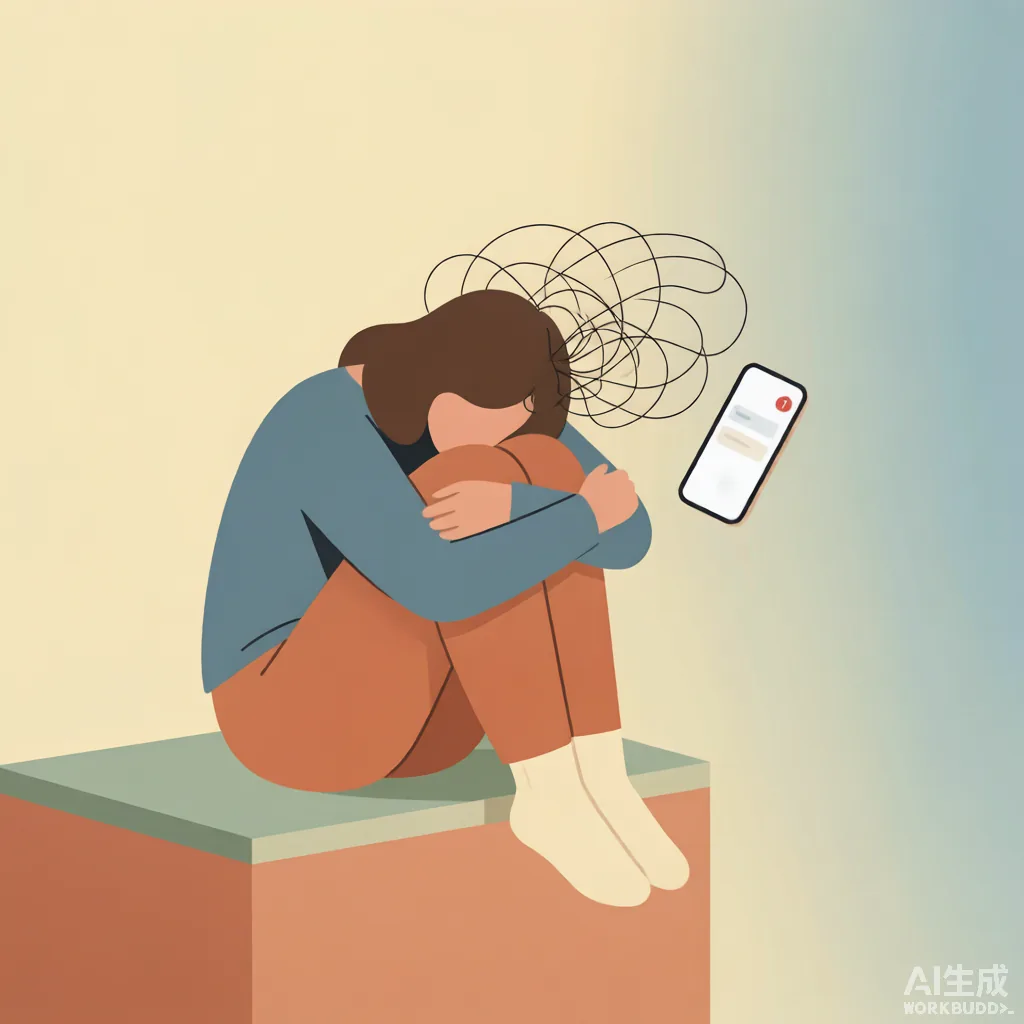
During the day, rumination sits on standby—your busyness keeps it in the background.
At night, the bed, the lamp, the phone notifications flip you into 'introspection mode,' and the signals you pushed aside all come back at once.
It's not that you're more fragile at night; it's that your brain is trying to reprocess unfinished material—it just picked the wrong time.
The first reason night rumination feels louder is the disappearance of external distraction. During the day, colleagues, tasks, and commutes slice your attention into fragments, leaving no room to dwell. At night that quiet returns the fragments, and you finally 'hear' them.
The second is circadian physiology. Cortisol, the stress hormone, naturally falls in the evening, and the prefrontal cortex that does calm evaluation slowly 'clocks off,' while the amygdala and hippocampus that handle emotion and memory stay relatively active—so emotional memories surface more easily and reason has a weaker grip.
The third is a sleep-onset memory bias. As you relax into that half-awake state, the brain runs a kind of 'daily review,' but it preferentially pulls emotionally charged fragments—especially worries left unresolved. So the anxieties you suppressed by day get replayed 'one more time' right before sleep.
The crucial distinction: review is 'see one thing clearly, then let it go'; rumination is 'turn one thing into a hundred what-ifs, and tighten.' The former leaves you with direction the next day; the latter just leaves you tired. The test is simple—after thinking, do you feel looser or tighter?
This also ties to attachment. People with an anxious attachment style are more likely at night to read 'he replied slowly today' or 'did she mean something by that line' as signs 'the relationship is in trouble,' and scan for them on repeat. Daytime busyness is the buffer; at night the buffer is gone and the scan runs itself.
One exercise you can try tonight: before bed, write each worry as a single sentence in a notebook, then close it and tell yourself 'this is handled for today, I'll reopen it at nine tomorrow.' Moving a thought from 'floating in your head' to 'stored on paper' lets the brain feel the matter is 'taken over' and finally loosen its grip.
If night rumination already disrupts your sleep or your daytime functioning, or you find yourself stuck in it for over an hour almost every night, it may no longer be just a 'habit'—it could be a signal that some feelings were never properly held during the day. White-knuckling through it won't help; talking with someone you trust, or considering professional support, is the real fix.
Frequently asked questions
Stop guessing, start understanding
Done reading and want to act? Take the test once and turn the article into understanding yourself.
Start Test