博客 / Partner & Attachment
Partner & AttachmentDating Apps and Attachment: Which Pattern the Algorithm Quietly Reinforces
You've probably lived this: you genuinely want a real relationship, yet your thumb keeps swiping late at night; lots of matches, few real conversations. You're not shallow—the product's interaction logic hits the most primitive part of how you relate to intimacy.
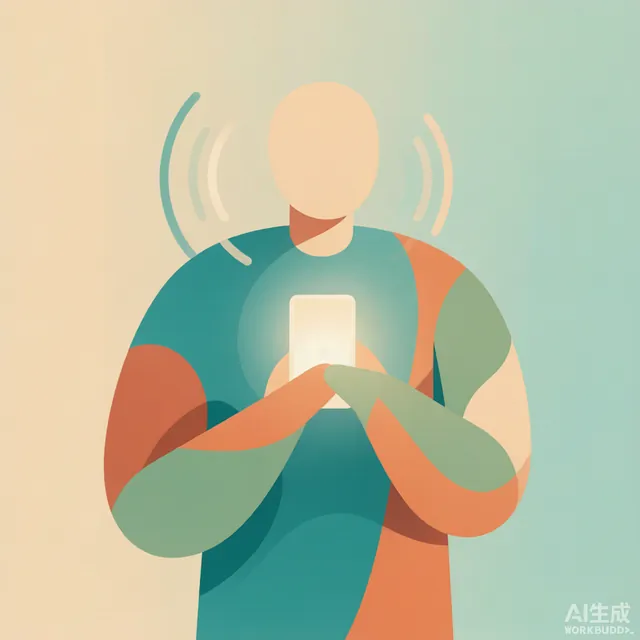
1. Swiping vs the secure base: a built-in contradiction
The attachment system wants a stable, predictable, returnable secure base. But a dating app's core mechanic is 'infinite options + instant feedback'—almost the opposite of a secure base.
The paradox of choice (Iyengar & Lepper, 2000) showed long ago: more options make people less satisfied and more regretful. Applied to intimacy, the thought 'the next one might be better' makes it hard to stop at one real person.
So the app's dilemma isn't 'can't meet people'—it's that the 'there's always a next one' design quietly erodes the focus deep connection requires.
2. The user profile of each attachment type on apps
Same person, different attachment type, completely different posture on the same app.
Secure—treats the app as a tool: fills the profile honestly, meets offline after a few chats, swipes left unbothered when it's not a match. They don't read 'no right-swipes' as 'I'm not enough'.
Anxious—treats the app as an emotional rollercoaster: expects instant replies to every message, self-doubts the moment they're left on read; a burst of matches brings brief confidence, a cold streak drops them back to 'I really am unworthy'. Common moves: retouched photos, rewriting openers, late-night mass-likes.
Avoidant—enjoys the control of shallow connection: vanishes when it gets warm, resists moving to call or meet; the app gives a 'can leave anytime' safety while keeping relationships on the surface.
Fearful—wants to be chosen yet fears being chosen: frantically swipes for confirmation, then flees when someone gets serious. Swings between 'being seen' and 'being engulfed'.
3. Which attachment the algorithm quietly reinforces
Most apps optimize for time-on-app and interaction volume, not relationship quality. This naturally favors two reactions: the anxious 'validation loop' (every like feels like a sip of being-loved confirmation) and the avoidant 'infinite swipe' (never has to actually hand over oneself).
In other words, the app won't push you toward secure—it pushes you toward the kind of unease that keeps you longest. The more anxious, the more it nudges you to swipe; the more rejected, the more you try to recover control with the next swipe.
But that doesn't make the app the enemy. Once you see the mechanism, you can move from 'dragged by the algorithm' to 'using it on purpose'.
4. Three healthier ways to use it
No need to delete—just change the usage.
Set a weekly cap: e.g., only swipe 30 minutes in a fixed window each week. Turn infinite into finite, disable the choice paradox, and give the anxious type fewer mood swings.
Move from text to voice or video fast: text is the easiest to misread and the easiest to breed a fantasy theater. A call within three days filters wrong people quickly and protects your emotional budget.
Treat the profile as a person, not a product: write one real current detail, use one life photo—more effective than nine retouched shots. You're filtering for how you'd live together, not a window display.
5. The attachment reading of ghosting
Being ghosted hurts not just because there's no reply, but because it lands exactly on what the attachment system fears most: being dropped, unexplained, unable to close.
For anxious types, ghosting confirms 'I really wasn't worth a proper goodbye'; for avoidant types, ghosting is sometimes their own most熟练 exit, so they struggle to understand others' pain.
But remember: ghosting reflects the other person's handling capacity, not your value. The only information it gives is one line—'this person lacks the maturity to end things well', full stop.
6. Boundaries: when the app becomes avoidance
Healthy app use is a bridge to people; unhealthy use is a shelter that replaces them.
Swiped for a year, never met a single match in person—screen replaces real contact.
Deletes the app whenever things get close, re-downloads when lonely, looping for over half a year.
Uses the app as emotional painkiller: swipe when lonely, swipe when anxious, emptier after.
Clear sleep or mood decline, strongly correlated with app use.
常见问题
Curious which attachment pattern your dating-app reactions come from?
Take the test and connect the emotions behind those swipes to a fuller picture of how you relate.
Start the test